
 By
By 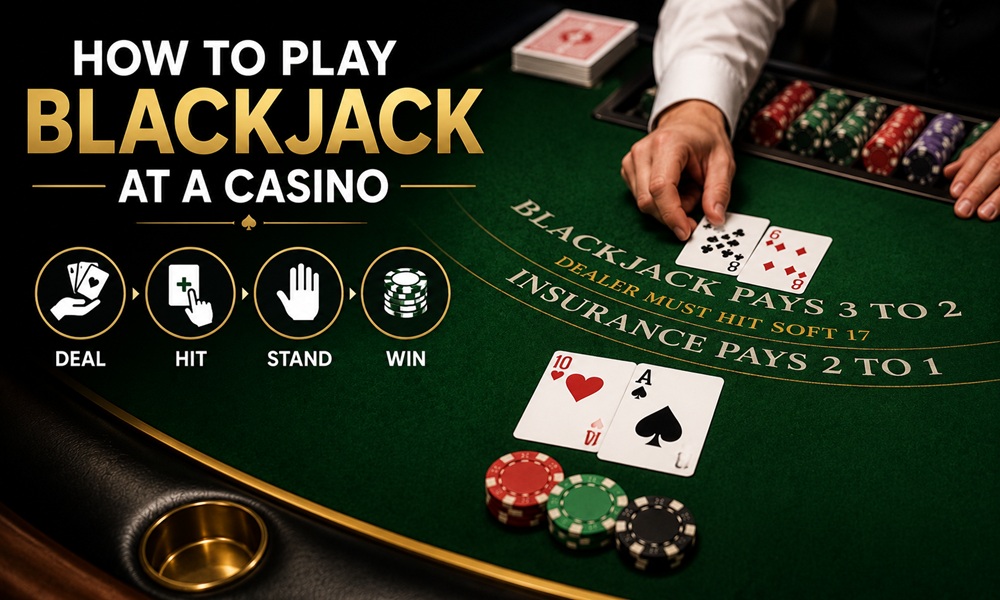
Quick answer: To play blackjack at a casino, sit at an open table, buy chips, place a bet in the betting circle, and try to beat the dealer’s hand by getting closer to 21 without going over. You use hand signals to hit, stand, double, or split. With basic strategy, blackjack has one of the lowest house edges on the floor.
The table looks intimidating from across the room. It is not. Blackjack has one goal and a handful of choices, and you can learn enough to sit down confidently in a few minutes.
Here is exactly how a hand plays out, step by step.
What is the goal of blackjack?
Beat the dealer. That is the whole game.
You win if your hand totals closer to 21 than the dealer’s, without going over 21. Go over, and you “bust” and lose instantly, even if the dealer busts afterward.
Card values are simple:
- Number cards are worth their face value.
- Face cards (Jack, Queen, King) are each worth 10.
- An Ace is worth 1 or 11, whichever helps you more.
A “blackjack” is an Ace plus any 10-value card on your first two cards. It is the best possible hand.
How do you join a blackjack table?
The etiquette matters here, because doing it wrong marks you as new and can annoy other players.
- Find an open seat at a table within your budget. Check the sign for the table minimum before you sit.
- Wait for the current hand to finish. Do not sit down mid-shoe and jump in without buying chips.
- Buy chips by placing cash on the felt, not in the dealer’s hand. The dealer will exchange it for chips. Never hand cash directly.
- Place your bet in the betting circle in front of your seat before the deal.
That is it. You are in.
What are the steps of a single hand?
Once bets are down, the hand follows a fixed order.
- The deal. The dealer gives each player two cards and takes two for themselves, one face up and one face down.
- Check for blackjack. If the dealer’s up card is an Ace or 10, they peek for blackjack. If they have it, the hand ends.
- Your decision. Working from the dealer’s left, each player chooses to hit, stand, double, or split.
- The dealer plays. The dealer reveals the hidden card and must hit until reaching at least 17, then stands.
- Payouts. Beat the dealer and you get paid. A true blackjack pays 3:2 at a good table.
What are your options on each hand?
You have four core moves. Knowing when to use them is the game.
- Hit: take another card. Signal by tapping the table.
- Stand: keep your hand. Signal by waving your hand flat over the cards.
- Double down: double your bet and take exactly one more card. Place a matching chip beside your original bet.
- Split: if you have two matching cards, split them into two hands with a second equal bet. Place a matching chip and signal a split.
Some tables also offer surrender (give up half your bet on a bad hand) and insurance (a side bet when the dealer shows an Ace). Skip insurance. It quietly raises the house edge.
What are the hand signals, and why do they matter?
Casinos require hand signals, not just words, so the overhead cameras can verify every decision. Learn these four:
| Move | Signal |
|---|---|
| Hit | Tap the felt with a finger |
| Stand | Wave a flat hand over your cards |
| Double down | Place a matching chip, point one finger |
| Split | Place a matching chip, make a V with two fingers |
Use the signal even if you say the word. The dealer will wait for it.
What is basic strategy, and how does it help?
Basic strategy is the mathematically best move for every hand you can be dealt against every dealer up card. Following it can cut the house edge to roughly half a percent, which is about as good as any game on the floor offers.
You do not need the full chart to start. A few high-value rules carry most of the benefit:
- Always split Aces and 8s. Two strong new hands beat one weak one.
- Never split 10s or 5s. You already have a great or workable total.
- Stand on hard 17 or higher. The risk of busting is too high to hit.
- Double down on 11 against almost any dealer up card.
- Hit a hard 12 to 16 when the dealer shows 7 or higher.
- Never take insurance. It is a losing bet over time.
Bring a small strategy card if you like. Most casinos allow it at the table.
What table should you look for?
Not all blackjack tables are equal, and the difference is real money.
Look for these player-friendly features on the sign or felt:
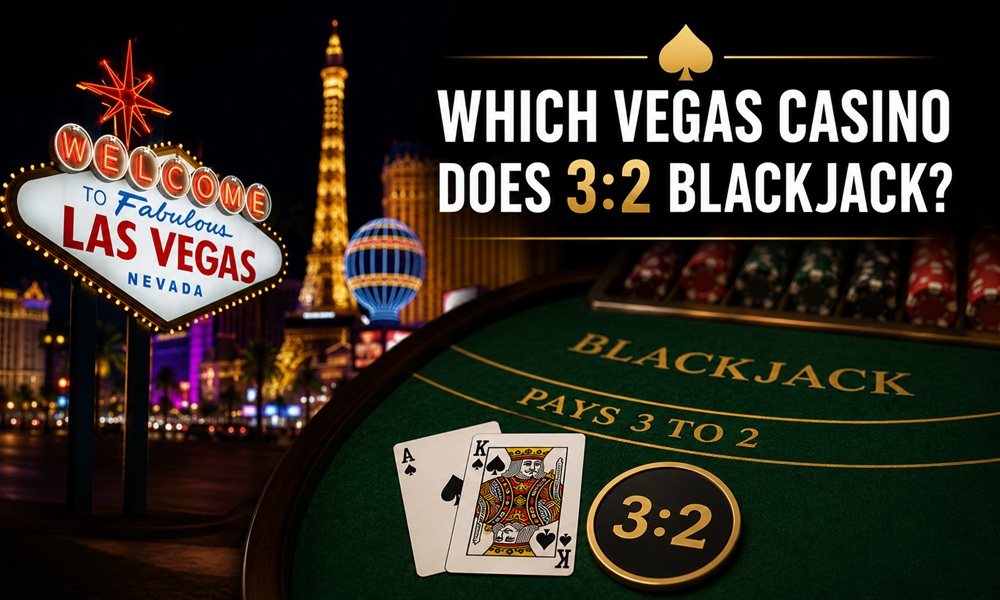
- 3:2 blackjack payout. Avoid 6:5 tables. A 6:5 payout quietly inflates the house edge and costs you more on every natural blackjack.
- Dealer stands on soft 17. Better for you than a dealer who hits soft 17.
- Double after split allowed. More chances to press an advantage.
- Surrender available. Lets you cut losses on the worst hands.
Read the felt before you buy chips. Two tables side by side can have very different rules.
What is basic blackjack etiquette?
A few simple courtesies keep the table smooth.
- Do not touch your cards in a face-up shoe game. Signal instead.
- Do not hand cash to the dealer. Lay it on the felt.
- Keep your bets and chips inside your betting circle.
- Tip the dealer occasionally if you are winning. It is customary, not required.
- Do not offer other players unsolicited advice on their hands.
What do first-timers say helped most?
Across beginner threads on Reddit and Quora, the same tips repeat. Learn the hand signals before you sit, because fumbling them is the most common source of nerves. Start at a low-minimum table during a quiet hour so you are not rushed. And memorize the handful of basic-strategy rules above rather than trying to wing it, since even a partial chart dramatically reduces mistakes.
One more piece of common wisdom: never buy insurance, no matter how tempting it feels when the dealer shows an Ace. Experienced players are nearly unanimous on this.
Key takeaways
- The goal is to beat the dealer by getting closer to 21 without busting.
- Buy chips by placing cash on the felt, then bet in the circle.
- Hit, stand, double, and split are your core moves, each with a required hand signal.
- Basic strategy can shrink the house edge to around half a percent.
- Choose 3:2 tables where the dealer stands on soft 17, and always skip insurance.
Frequently asked questions
What beats what in blackjack?
The hand closest to 21 without going over wins. A two-card blackjack beats a regular 21.
Do you have to use hand signals?
Yes. Casinos require visible hand signals so cameras can verify each decision.
Should I ever take insurance?
No. Insurance is a side bet that raises the house edge over time.
What is the difference between 3:2 and 6:5 blackjack?
A 3:2 table pays more on a natural blackjack. A 6:5 table pays less and increases the house edge, so 3:2 is far better for players.






Comments